The surprisingly complicated truth about how human brains differ
Spend a little time on social media and it can begin to feel as if almost everyone is neurodivergent.
One person has recently discovered that they are autistic. Another has received an ADHD diagnosis at 46. Someone else is talking about dyslexia, dyspraxia, sensory processing differences or auditory processing disorder. There are videos about masking, executive dysfunction, rejection sensitivity, hyperfocus, time blindness and the exhaustion of trying to function in a world that was not designed for your brain.
This growing visibility has prompted an interesting question:
Are there now more neurodivergent people than neurotypical people?
The short answer is: probably not, according to the definitions and evidence most commonly used today.
A frequently quoted estimate is that approximately 15–20% of the population is neurodivergent. That would mean roughly one in five or one in six people, leaving neurotypical people as the numerical majority.
However, the honest answer is more complicated. There is no universally accepted medical definition of neurodivergent, no single diagnostic test for “neurodivergence” and no global census counting everyone whose brain works differently from the supposed norm.
The answer changes depending on:
- Which conditions we include
- Whether we count only formally diagnosed people
- Whether we include people who self-identify
- How we account for people with more than one condition
- Whether mental health conditions count as neurodivergence
- Whether we are discussing children, adults or lifetime prevalence
- Where we draw the rather fuzzy boundary between “typical” and “different”
There is also a more philosophical problem hiding underneath the statistics: what exactly is a normal brain?
Human brains are not mass-produced machines. They vary in attention, memory, sensory sensitivity, emotional intensity, language, coordination, sociability, motivation and learning style. There may be no perfectly neurotypical person against whom everyone else can be measured.
So, while neurotypical people probably remain the majority under the conventional definition, the neat division between two kinds of human beings may be far less scientifically tidy than our language suggests.
What does neurodiversity actually mean?
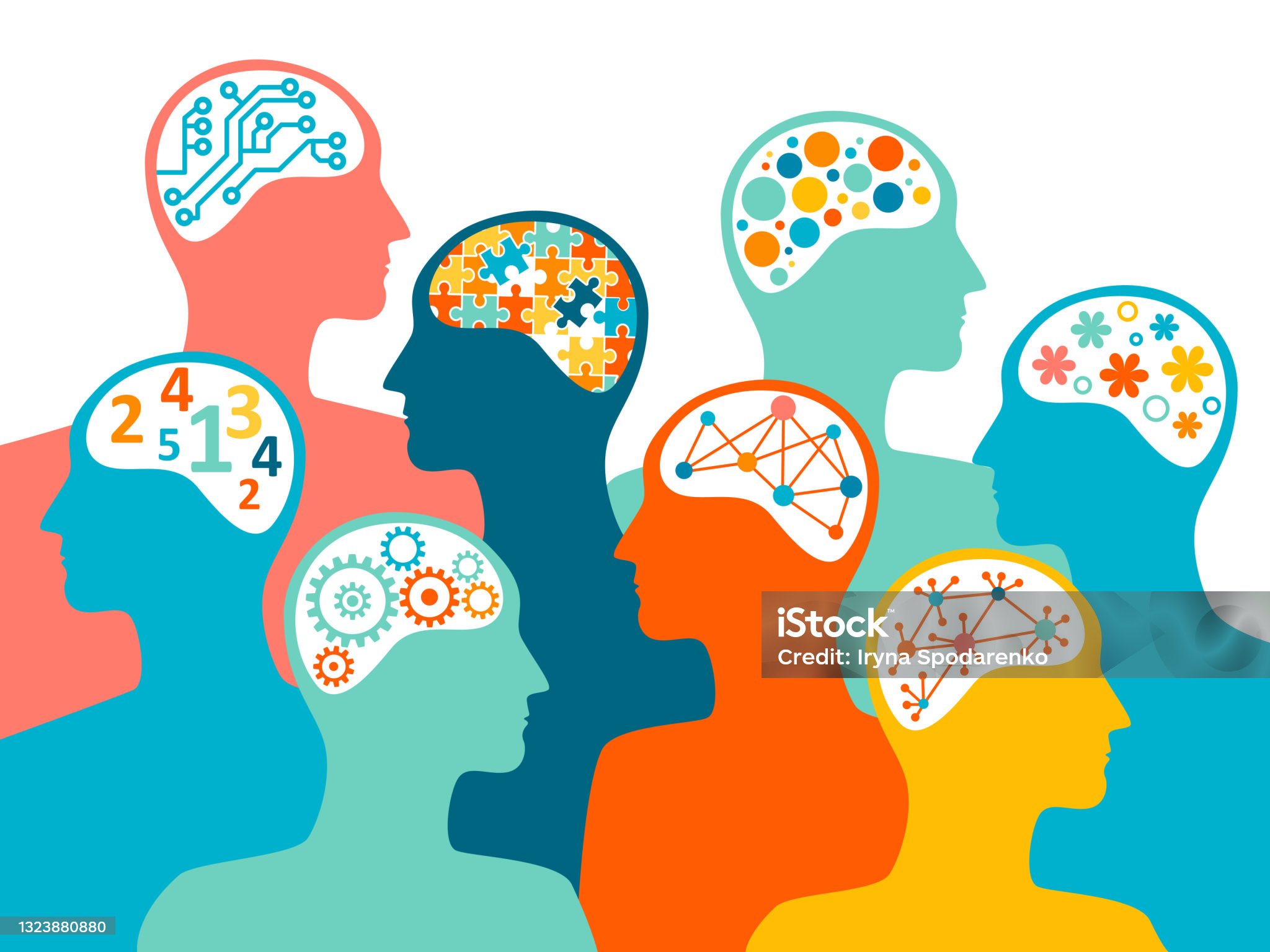
The word neurodiversity refers to the natural variation that exists among human brains and nervous systems.
In this sense, everyone is part of neurodiversity, just as everyone is part of human biodiversity. Neurodiversity does not mean autism, ADHD or dyslexia alone. It describes the diversity of the whole human population.
A group can be neurodiverse. Humanity is neurodiverse. A classroom containing children who think, learn and communicate in different ways is neurodiverse.
Strictly speaking, an individual person is not “neurodiverse”. They may be neurotypical or neurodivergent, but diversity describes variation within a group.
The concept became closely associated with the autistic self-advocacy movement during the 1990s. It offered an alternative to the idea that neurological differences should always be understood exclusively as diseases, defects or failures of normal development.
The neurodiversity perspective does not necessarily claim that every aspect of every condition is positive. Autism, ADHD, dyspraxia and learning differences can create serious difficulties. Some people need considerable daily support. Neurodiversity asks us to recognise that disability may arise from a combination of an individual’s characteristics and the environment in which they are expected to function.
For example, a person who cannot tolerate bright fluorescent lighting may be significantly disabled in a noisy open-plan office but function extremely well in a quieter, more flexible setting. A dyslexic student may struggle with timed written examinations while demonstrating exceptional verbal reasoning, creativity or practical understanding.
A difference can be real, disabling and deserving of support without making the entire person defective.
What does neurodivergent mean?
Neurodivergent is an umbrella term for someone whose neurological development or functioning differs from what society regards as typical.
It is a social and descriptive term rather than a formal diagnosis. You will not visit a psychiatrist and receive “neurodivergence” as a diagnosis in itself. Instead, a person may receive a diagnosis such as autism spectrum disorder, ADHD or developmental coordination disorder.
The conditions most consistently placed under the neurodivergent umbrella include:
- Autism
- ADHD
- Dyslexia
- Developmental coordination disorder, commonly called dyspraxia
- Dyscalculia
- Dysgraphia
- Developmental language disorder
- Tourette syndrome and other tic disorders
- Intellectual disability
Some people use a considerably broader definition that also includes:
- Obsessive-compulsive disorder
- Bipolar disorder
- Schizophrenia
- Epilepsy
- Acquired brain injuries
- Post-traumatic stress disorder
- Anxiety disorders
- Depression
- Personality disorders
- Sensory processing differences
- Other neurological or psychiatric conditions
This disagreement matters enormously. If one researcher counts only autism, ADHD and specific developmental differences, while another includes anyone who has experienced a mental health condition, they will produce dramatically different totals.
When someone confidently announces that “one in five people is neurodivergent”, it is sensible to ask: one in five according to which definition?
So, how many people are neurodivergent?
The figure most commonly quoted by employers, campaigners and neurodiversity organisations is 15–20% of the population.
The UK Government has used estimates in this general region. Guidance on employing disabled people states that hidden impairments, including autism, dyslexia, dyspraxia, ADHD, dyscalculia and learning disabilities, are thought to affect approximately 10–15% of the population. Other government workplace guidance refers to estimates of around 20% identifying as neurodivergent in some way. UK Government employment guidance
These are useful broad estimates, but they should not be mistaken for the result of a precise global headcount.
If 20% of people are neurodivergent, that means 80% are assumed to be neurotypical. Neurotypical people would therefore outnumber neurodivergent people by approximately four to one.
Even if the true figure were closer to 30%, neurotypical people would still be the majority. Neurodivergent people would need to make up more than 50% of the population before we could say they numerically outnumber neurotypical people.
At present, we do not have reliable evidence for that conclusion under the conventional definition of neurodivergence.
But that does not mean neurodivergence is rare. One person in five represents an enormous part of society. In a school of 1,000 pupils, it could mean around 200 neurodivergent children. In a company employing 5,000 people, it could mean approximately 1,000 employees.
That is not a small fringe group. It is a substantial section of the population whose needs have often been overlooked.
What do the figures for individual conditions tell us?
To understand where the 15–20% estimate comes from, we need to look at particular forms of neurodivergence. Unfortunately, we cannot simply add the prevalence figures together because the conditions frequently overlap.
Autism
Global estimates often place autism prevalence at around 1% of the population, although identification rates differ significantly between countries and age groups.
The latest major US surveillance figures are higher. Data published by the US Centers for Disease Control and Prevention found that approximately one in 31 eight-year-old children, or 3.2%, had been identified as autistic in 2022 across the communities studied. The figure was more than three times higher among boys than girls. CDC autism prevalence data
This does not necessarily mean that autism suddenly increased from 1% to more than 3% everywhere. The CDC surveillance programme covers specific US sites rather than the entire world. Identification also depends on access to services, awareness, assessment practices and which records researchers can examine.
Many autistic adults, particularly women and people from marginalised groups, grew up at a time when autism was understood much more narrowly. They may have been diagnosed with anxiety, depression or a personality disorder, or simply described as shy, difficult, dramatic, obsessive or antisocial.
Some will never appear in official autism figures.
ADHD
ADHD is also more common than was once assumed.
According to the CDC, approximately 7 million US children aged three to 17—11.7% of that age group—had a current ADHD diagnosis in 2024. CDC ADHD data
Among American adults, a 2023 national survey estimated that 15.5 million adults, or 6%, had a current ADHD diagnosis. Around half of those adults had received their diagnosis during adulthood. CDC adult ADHD report
These statistics illustrate why ADHD can seem far more visible now. Many people who would previously have remained undiagnosed are finally being recognised.
Adult ADHD may look different from the stereotype of a disruptive little boy who cannot sit still. It can appear as chronic disorganisation, internal restlessness, emotional impulsivity, difficulty starting tasks, poor time awareness, inconsistent performance or repeatedly becoming overwhelmed by ordinary responsibilities.
Women and girls may be more likely to present with inattentive or internalised symptoms. A bright child may compensate academically while paying a considerable psychological price. Diagnosis can therefore arrive decades after the difficulties began.
Dyslexia
Dyslexia is one of the most common specific learning differences.
A systematic review and meta-analysis published in 2022 estimated the worldwide prevalence of developmental dyslexia among primary-school children at approximately 7.1%. The exact figure varied according to the definitions and assessment methods used. Global dyslexia meta-analysis
UK health education material commonly states that dyslexia may affect up to 10% of the population, with around 4% experiencing it severely. NHS England learning resource
Dyslexia is not simply “seeing letters backwards”. It can affect the ability to process written language, connect sounds with letters, spell consistently and read fluently. It may also affect working memory, sequencing and organisation.
Intelligence is not the issue. Many dyslexic people have average or above-average intelligence and develop impressive compensatory strategies. This is another reason that diagnosis statistics may underestimate the true prevalence.
Dyspraxia or developmental coordination disorder
Developmental coordination disorder, often known as dyspraxia, affects movement, motor planning and coordination. It can make handwriting, driving, sport, cooking, dressing and navigating physical spaces more difficult.
A 2024 systematic review and meta-analysis estimated that developmental coordination disorder affects approximately 5% of children. The estimate was around 7% among boys and 4% among girls, although results differed across regions and studies. Developmental coordination disorder meta-analysis
The NHS notes that although DCD is usually identified during childhood, difficulties often continue into adulthood. NHS guidance on developmental coordination disorder
Dyspraxia remains relatively poorly understood by the general public. An adult may believe that they are merely clumsy, messy or hopeless at practical tasks without recognising an underlying pattern.
Other forms of neurodivergence
Prevalence becomes even harder to calculate when we include dyscalculia, dysgraphia, Tourette syndrome, developmental language disorder, sensory processing differences and intellectual disabilities.
Definitions and assessment methods vary. Some conditions are routinely diagnosed in one country but rarely recognised in another. Some labels describe overlapping aspects of neurological functioning rather than completely separate groups of people.
This is why there is no trustworthy calculation created by simply adding:
autism + ADHD + dyslexia + dyspraxia + every other condition.
The same person may belong in several of those categories.
The crucial problem of overlap
Imagine that 10% of a population has condition A and 7% has condition B. It would be incorrect to conclude automatically that 17% has either condition. Some people will have both.
This overlap, often called co-occurrence or comorbidity in medical research, is particularly common among neurodevelopmental conditions.
A person might be:
- Autistic and have ADHD
- Dyslexic and dyspraxic
- Autistic, dyslexic and dyspraxic
- Diagnosed with ADHD and Tourette syndrome
- Autistic with ADHD and a developmental language disorder
- Dyslexic with ADHD and dyscalculia
Research suggests that ADHD and developmental coordination disorder may co-occur in approximately half of clinical cases, although estimates vary depending on the population and research method. Review of ADHD and DCD overlap
Autistic people also experience high rates of ADHD, learning differences, epilepsy, anxiety and other conditions. These are not five separate people to be counted five times. They are one human being whose profile does not fit neatly into a single diagnostic box.
If we added every headline prevalence figure without correcting for overlap, we could produce a very large and very misleading percentage.
There is another difficulty: people with multiple conditions may be more likely to seek assessment, while those with less obvious difficulties may never reach services. Clinical samples may therefore look different from the wider population.
In short, we need large population studies assessing the same people for multiple conditions under an agreed definition. At present, those data remain incomplete.
Why does it feel as if everyone is neurodivergent now?
If neurotypical people are probably still the majority, why does neurodivergence suddenly seem to be everywhere?
There are several reasonable explanations.
1. We have become better at recognising it
Historically, diagnostic models were based disproportionately on the people who reached specialist services. This often meant white boys and men with noticeable or disruptive presentations.
People whose symptoms were quieter, internalised or successfully masked were frequently missed. Girls with ADHD might daydream rather than run around the classroom. Autistic women might learn social rules consciously and imitate their peers. Academically able dyslexic students might compensate through memory, intuition and long hours of work.
Better recognition does not necessarily mean society is inventing new disorders. It can mean we are finally seeing people who were always there.
2. Adults are being diagnosed
Neurodevelopmental conditions begin during development, but this does not mean they are always identified in childhood.
Many adults reach their thirties, forties, fifties or beyond before recognising the explanation for a lifetime of difficulties. They may seek assessment after their child is diagnosed and they notice striking similarities.
The diagnosis is new. The underlying pattern is not.
3. Social media has given people a vocabulary
Before online communities, someone might have thought:
I am lazy. I am too sensitive. I am disorganised. I cannot cope with things everyone else finds easy. There must be something wrong with my character.
Now they may encounter concepts such as sensory overload, masking, executive dysfunction or time blindness. Finding language for an experience can be profoundly relieving.
Social media can also oversimplify. A short video cannot conduct a clinical assessment, and many supposedly definitive “signs” of ADHD or autism are experiences found across the general population.
Losing your keys occasionally does not establish ADHD. Preferring small groups does not establish autism. Disliking a scratchy jumper does not necessarily indicate a sensory processing condition.
The relevant questions concern the pattern, intensity, duration, developmental history and effect on daily functioning, not the presence of one relatable trait.
4. Algorithms create an illusion of universality
Once you watch several videos about ADHD, autism or dyslexia, an algorithm will offer you more of them. Soon, your digital world may appear to consist almost entirely of neurodivergent people.
This is not a representative population sample. It is personalised content selected to hold your attention.
Someone watching gardening videos may begin to feel that everyone owns a greenhouse. Someone following divorce accounts may feel that every marriage is ending. Visibility within a carefully curated feed should not be mistaken for prevalence across society.
5. Stigma has reduced
People were once strongly discouraged from discussing disability, mental health or developmental differences. Families concealed diagnoses. Adults feared losing jobs or being treated as incapable.
Although stigma has certainly not disappeared, more people now feel able to identify publicly as autistic, ADHD, dyslexic or otherwise neurodivergent.
Increased visibility is not the same as increased incidence.
6. Modern environments may expose differences more sharply
A neurological difference may become more disabling when the environment places constant pressure on the area of difficulty.
Modern life often demands:
- Continuous switching between tasks
- Rapid responses to messages
- Complex digital administration
- Long periods of sitting still
- Constant exposure to screens and notifications
- Open-plan working
- Heavy reading and writing demands
- Self-directed organisation
- Tolerance of noise, light and crowds
- Management of multiple passwords, appointments and systems
Someone who might have functioned well in a practical, structured or outdoor role can struggle in an environment requiring relentless executive functioning and sensory tolerance.
The brain may not have changed, but the demands surrounding it have.
Are rising diagnosis rates proof of an epidemic?
Not necessarily.
When the recorded prevalence of a condition increases, several things may be happening:
- The condition itself may have become more common
- Diagnostic criteria may have broadened
- Awareness may have improved
- Services may be identifying people earlier
- Previously excluded groups may now be assessed
- Families may be more willing to seek help
- Schools may be documenting needs more carefully
- Diagnostic substitution may have occurred
- Researchers may be using better surveillance methods
The latest CDC autism figures found that one in 31 eight-year-olds across its surveillance sites had been identified as autistic. That is much higher than historical records. However, the finding refers to identification within a particular surveillance network. It does not prove that 3.2% of every age group in every country is autistic, nor does it tell us how much of the increase reflects a change in underlying incidence.
Similarly, increased adult ADHD diagnosis may reflect a backlog of people who were missed during childhood.
It is therefore more accurate to say that identified prevalence has risen than to announce that these conditions are suddenly spreading.
Autism and ADHD are not contagious. You do not develop them because you watched too many TikTok videos. Online content may prompt someone to recognise a longstanding pattern, but recognition and causation are entirely different things.
What if we use a broader definition of neurodivergence?
This is where the question becomes much more interesting.
If neurodivergence includes only commonly recognised developmental conditions such as autism, ADHD, dyslexia and dyspraxia, the best broad estimate remains somewhere around 15–20%. Neurotypical people are the majority.
If we expand the umbrella to include lifelong neurological conditions, serious mental illnesses, learning disabilities, acquired brain injuries and chronic psychiatric disorders, the proportion increases.
If we include anyone who will experience depression, anxiety, trauma-related changes or another mental health problem at any point in life, we could eventually reach a very substantial proportion of humanity.
But this would create several conceptual problems.
A person may experience a severe episode of depression and later recover. Were they temporarily neurodivergent? Are they still neurodivergent after recovery? Does a psychological response to bereavement or trauma belong in the same category as a developmental condition present from early life?
There is no universally accepted answer.
Some people with psychiatric diagnoses find the neurodivergent label affirming because it reduces shame and recognises a meaningful difference in how they process the world. Others prefer to reserve the term for developmental neurological differences. Neither preference gives us a standard population measure.
Under an extremely broad definition, it might be possible to argue that neurodivergent people approach or exceed half of the population at some point across the lifespan. However, there is not currently sufficient consistent evidence to state that as a scientific fact.
At that point, we may simply be rediscovering that most human beings depart from an imagined ideal of normality in one way or another.
Is “neurotypical” a scientifically precise category?
Not really.
Neurotypical is generally defined by what someone is not. A neurotypical person is assumed not to have a recognised neurological or neurodevelopmental difference.
But that does not mean all neurotypical people think alike.
One neurotypical person may be highly sociable; another may be introverted. One may have an excellent memory but poor concentration. Another may be wonderfully organised but emotionally reactive. People vary in sensory preferences, verbal ability, mathematical reasoning, coordination and attention without crossing a diagnostic threshold.
Diagnostic boundaries are created partly to identify when a pattern causes significant difficulty or warrants support. They are necessary and useful, but nature does not always obey their edges.
Attention, sociability and sensory sensitivity exist on continua. A diagnosis involves more than being at one end of a personality spectrum, yet there may not be a bright biological line separating every neurotypical person from every neurodivergent one.
This does not mean diagnoses are meaningless. It means categories are tools for understanding complex reality, not perfectly sealed boxes discovered in the brain.
Does everyone have “a little bit of ADHD” or autism?
No—at least not in the sense implied by that phrase.
Many people experience traits associated with neurodevelopmental conditions. Almost everyone gets distracted, procrastinates, feels socially awkward or becomes overwhelmed occasionally.
A diagnosable condition involves a persistent pattern that usually begins during development, appears across relevant areas of life and produces meaningful impairment or support needs.
Saying “everyone is a little ADHD” can minimise the experience of someone who repeatedly loses employment, misses essential appointments, cannot manage daily administration or lives in a state of exhausting chaos despite enormous effort.
Likewise, saying “we are all on the autism spectrum” misunderstands the term. The autism spectrum describes the varied presentations and support needs among autistic people; it is not necessarily a ruler on which every human being occupies a position between “not autistic” and “very autistic”.
We can recognise that traits are widely distributed without pretending that everyone has the same experience.
Why diagnosis statistics probably underestimate some groups
Official figures count the people systems manage to identify. Systems are not equally accessible to everyone.
Assessment may require:
- Recognising that a problem exists
- Knowing where to ask for help
- Persuading a GP or school to refer
- Surviving a long waiting list
- Paying privately when public services are unavailable
- Having someone who can describe childhood development
- Encountering a clinician familiar with diverse presentations
People who are poor, socially isolated, culturally marginalised or living in areas with limited services may be less likely to obtain a diagnosis.
Women and girls have often been overlooked, particularly when they mask difficulties or present with internal distress rather than disruptive behaviour.
Cultural expectations also influence how behaviour is interpreted. The same child may be labelled gifted, naughty, lazy, traumatised, eccentric or neurodivergent depending on who observes them.
Current statistics therefore include two opposite risks: underdiagnosis among people whose needs have been missed and overconfident self-labelling based on vague online descriptions.
Both can be true simultaneously.
What do school statistics show?
In England, figures for the 2024–25 school year showed substantial numbers of children receiving special educational needs support or having an Education, Health and Care plan. The proportion differed by educational setting and age; for example, around 18.2% of primary pupils and 16.5% of secondary pupils were recorded as having SEN support or an EHC plan. Department for Education SEN statistics
However, SEN is not synonymous with neurodivergence.
Some neurodivergent children do not receive SEN support, while some pupils receive support for needs that would not always be classified as neurodivergence. These figures cannot tell us the exact percentage of children who are neurodivergent.
They do demonstrate that differences affecting learning are not unusual exceptions. Every ordinary classroom is likely to contain pupils with different cognitive, sensory, communication and educational needs.
An education system designed around one “standard” learner is therefore unlikely to serve everyone well.
Are neurodivergent people becoming the majority in younger generations?
We cannot currently say that.
Diagnosis and identification rates are often higher among children and younger adults. This could mean that neurodevelopmental differences are genuinely becoming more common. It could also reflect improved awareness, broader criteria, better school monitoring and the identification of people who would have been missed in previous generations.
Older adults did not grow up in a world where most teachers understood masking, inattentive ADHD, developmental coordination disorder or subtle autistic presentations. Their absence from diagnostic registers does not prove they were neurotypical.
Comparing diagnosed young people with diagnosed older people is therefore not an equal comparison.
We would need consistent assessment across representative samples of every generation to know how much reflects real prevalence differences and how much reflects changing recognition.
Perhaps we are asking the wrong question
The question “Are there more neurodivergent people than neurotypical people?” sounds as if humanity can be divided cleanly into two opposing camps.
Reality is messier.
A more useful set of questions might be:
- How much neurological variation exists within the population?
- Which environments unnecessarily disable people?
- Who is being missed by current assessment systems?
- How can schools support different ways of learning?
- How can workplaces reduce sensory and executive-function barriers?
- How do we preserve access to diagnosis without pathologising every personality trait?
- How can we listen to people’s experiences without allowing social media to replace careful assessment?
Whether neurodivergent people make up 15%, 20% or some higher future estimate, the practical conclusion is similar: millions of people are being asked to function in systems built around a narrow model of how attention, communication, learning and productivity should look.
What would a neurodiversity-friendly society look like?
A neurodiversity-friendly society would not assume that everyone needs identical support.
It might offer:
- Clear written and verbal instructions
- Flexible working arrangements
- Quiet spaces and reduced sensory overload
- Alternatives to unnecessary telephone calls
- Predictable routines where possible
- Advance warning of changes
- Extra processing time
- Assistive technology
- Different ways to demonstrate knowledge
- Interviews focused on actual job skills
- Permission to use headphones, movement or sensory aids
- Direct communication without hidden expectations
Many of these adjustments cost little and benefit neurotypical people too.
Clear instructions help almost everyone. Flexible work can support parents, disabled people and those experiencing temporary stress. Quiet spaces improve concentration. Captions help people in noisy environments as well as those with auditory processing difficulties.
Designing for variation does not require deciding exactly who qualifies as different. It begins by accepting that human beings do not all work best under identical conditions.
Neurodivergence is not automatically a superpower
It is tempting to respond to stigma by insisting that every neurodivergent person possesses exceptional gifts.
Some people do describe strengths associated with their neurological profile, including:
- Creative or original thinking
- Strong pattern recognition
- Intense concentration on meaningful interests
- Attention to detail
- Visual reasoning
- Honesty and directness
- Deep specialist knowledge
- Persistence
- Unusual problem-solving approaches
- Sensitivity to other people or the environment
But no condition guarantees a particular talent.
The “neurodivergent superpower” narrative can become another burden. A struggling person may feel that they are failing at being neurodivergent because they have not founded a technology company, written a masterpiece or developed a photographic memory.
A person does not have to compensate for their difficulties by being extraordinary. Human worth is not a productivity contest.
Neurodivergence can involve strengths, neutral differences and profound disability—sometimes within the same person.
Equally, neurodivergence should not be romanticised
A strengths-based perspective is valuable, but it should not erase suffering.
ADHD can contribute to academic difficulties, financial problems, accidents, relationship conflict and intense shame. Autism can involve disabling sensory overload, communication barriers and a need for extensive support. Dyslexia can make education unnecessarily humiliating. Dyspraxia can affect everyday independence and confidence.
Environmental change may reduce disability, but it will not remove every difficulty.
The humane position is not “difference is always a gift” or “difference is always a disorder”. It is:
This person’s way of functioning is real. Let us understand both their strengths and their difficulties, reduce avoidable barriers and provide appropriate support.
The final answer: are there more neurodivergent people?
Based on the most commonly used definitions and current broad estimates, no. Neurotypical people still appear to be the numerical majority.
A reasonable summary of the evidence is:
- Approximately 15–20% of people may be neurodivergent under commonly used definitions.
- Autism estimates vary, with global estimates often around 1% and recent CDC surveillance identifying around 3.2% of eight-year-old children in the US sites studied.
- ADHD affects a substantial minority, with recent US figures estimating a current diagnosis in 11.7% of children aged three to 17 and 6% of adults.
- Developmental dyslexia may affect approximately 7–10% of people, depending on the definition and population studied.
- Developmental coordination disorder affects approximately 5% of children.
- These figures cannot be added together because many people have more than one condition.
- Diagnosis rates are influenced by awareness, access, culture, gender, age and assessment practices.
- A broader definition including psychiatric and acquired conditions would produce a higher figure, but no agreed method currently establishes that neurodivergent people exceed 50% of the population.
So the most scientifically responsible response is:
Neurodivergent people probably do not outnumber neurotypical people, but they are far more common than society historically recognised. We also lack a sufficiently agreed definition and comprehensive dataset to draw a perfectly precise dividing line.
Perhaps that uncertainty tells us something important.
The mythical “normal brain” may be much narrower than normal humanity. We have built many schools, workplaces and social rules around one preferred style of attention, communication and behaviour, then acted surprised when millions of people do not fit comfortably inside it.
We do not need neurodivergent people to become the majority before their needs matter.
A minority of 15–20% is still present in every town, school, workplace, hospital, friendship group and extended family. They are not rare anomalies standing outside ordinary human life. They are part of what ordinary human life has always been: varied, complicated, occasionally chaotic and gloriously resistant to being squeezed into one tidy box.