
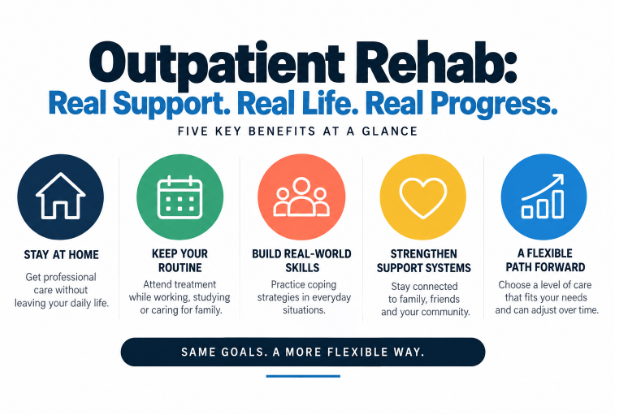
Choosing to address a difficult relationship with alcohol is one decision. Figuring out what treatment should actually look like is another. Residential programs are often the first option people picture, but spending weeks away from home is not realistic or necessary for everyone. Work, children, finances, school and other responsibilities do not disappear because someone needs help. Outpatient treatment offers another route, providing structured professional support while allowing participants to continue living at home. For people who are medically appropriate for this level of care, that combination can make treatment easier to enter and sustain.
Treatment Without Leaving Your Life
One of the biggest advantages of outpatient alcohol rehab is the ability to receive organized treatment without moving into a residential facility. Depending on the program and an individual’s needs, care may include individual therapy, group counseling, education about alcohol use, relapse prevention strategies, medication management and family involvement.
This structure can make treatment more accessible for people who cannot leave their daily lives for an extended period. A parent may still need to care for children. An employee may want to continue working. Someone attending college may need to remain enrolled. Outpatient care can often be scheduled around those obligations, reducing one of the practical barriers that might otherwise keep a person from seeking help.
That flexibility does not mean treatment lacks structure. Programs vary considerably in intensity, from appointments scheduled a few times each week to intensive outpatient programs that require several hours of participation on multiple days. The right level depends on factors such as alcohol use patterns, physical health, mental health, home environment and previous treatment experiences.
Recovery Happens in Real Life
Residential treatment creates distance from many everyday triggers. Outpatient treatment takes a different approach by allowing people to practice new skills while continuing to encounter ordinary responsibilities and pressures. That can be demanding, but it also gives therapists and participants immediate information about what is working and what needs attention.
The challenges in recovery rarely exist only inside a treatment setting. Stress after a difficult workday, conflict with a family member, loneliness on a weekend or an invitation to a social event involving alcohol can test new habits. Someone receiving outpatient care can discuss these situations with a counselor soon after they happen and develop practical ways to respond differently the next time.
This real-world practice can help recovery skills become part of everyday life rather than concepts reserved for therapy sessions. Participants can identify triggers, establish healthier routines and learn how to navigate social situations without relying on alcohol. Over time, those repeated experiences can build confidence in handling difficult moments.
Different Levels of Support
Outpatient treatment is not a single standardized program. Traditional outpatient care may involve fewer weekly hours and work well for people who need ongoing counseling with considerable independence. Intensive outpatient programs generally provide more frequent therapy and structured programming. Partial hospitalization programs can offer an even higher level of daytime support while still allowing participants to return home afterward.
A professional assessment helps determine which approach is appropriate. Alcohol withdrawal can sometimes require medical supervision, particularly for people who drink heavily or have experienced withdrawal complications before. Outpatient treatment should not be viewed as a way to bypass medical evaluation when withdrawal may pose a health risk.
Treatment needs can also change. Someone may begin with intensive support and gradually reduce the frequency of appointments as stability improves. Another person may discover that outpatient care does not provide enough structure and move to a residential program. Adjusting the level of care is part of responding to actual needs rather than forcing recovery into a predetermined schedule.
Keeping Important Support Systems
Recovery does not happen in isolation, and outpatient programs can help people strengthen the relationships and routines that will remain after formal treatment ends. When appropriate, family therapy or educational sessions can help relatives understand alcohol use disorders, communication patterns, boundaries and ways to support recovery without taking responsibility for another person’s choices.
Remaining connected to work, school and community can also provide a sense of continuity. Instead of returning from residential treatment and suddenly facing a full schedule again, people in outpatient programs learn to manage recovery alongside those responsibilities from the beginning.
At the same time, the home environment matters. A stable and supportive living situation can make outpatient treatment more workable. A household where alcohol is constantly available, substance use is common or serious conflict is ongoing may make recovery harder. Treatment professionals can evaluate these circumstances when recommending an appropriate level of care.
Finding the Right Treatment Fit
The best treatment program is not necessarily the most intensive one. It is the one that provides enough support for the individual’s medical, psychological and practical needs while giving that person a realistic opportunity to remain engaged in care.
Cost, insurance coverage, transportation, scheduling, family responsibilities and access to qualified providers can all affect the decision. Clinical considerations matter just as much. A thorough assessment can identify whether outpatient care offers sufficient support or whether medical detoxification or residential treatment would be safer and more effective.
For many people, outpatient treatment offers a practical middle ground between trying to manage alcohol problems alone and stepping away from everyday life for residential care. It provides professional guidance, accountability and repeated opportunities to practice recovery skills where they ultimately matter most, in daily life.
Outpatient rehab will not fit every situation, but when it matches a person’s clinical needs and circumstances, it can provide a flexible and meaningful path toward lasting change.


