
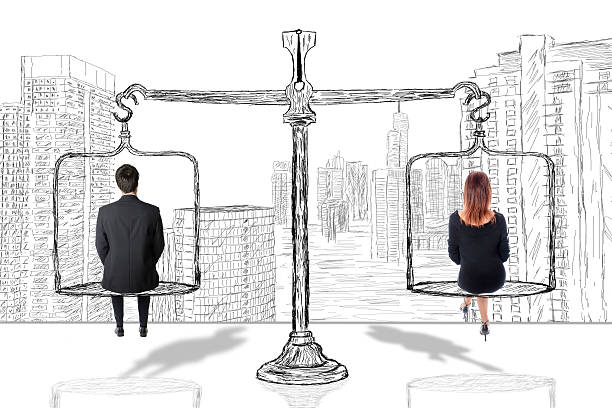
In recent years, public conversations about gender dynamics have grown louder and more polarized. One particularly concerning trend is the rising visibility of male resentment toward women, seen in online communities, dating discourse, and broader cultural reactions to feminism. From the growth of the “manosphere” to the backlash against #MeToo, it’s become increasingly important to ask: Why do so many men appear to resent women?
This question isn’t simple. It sits at the intersection of psychology, sociology, history, and culture. To unpack it, we need to move beyond reactive takes and examine the underlying forces that drive this phenomenon—many of which are systemic, deeply emotional, and often invisible even to those affected.
1. The Legacy of Patriarchy and Shifting Power Dynamics
Historically, men held systemic power over women in nearly every domain—political, economic, sexual, and social. Patriarchy established norms where male dominance was seen as natural and desirable. Men were providers, protectors, and decision-makers, while women were expected to be submissive, domestic, and dependent.
Feminism has challenged these structures, advocating for equality and autonomy for women. This shift, while overdue and necessary, also disrupted long-standing roles. According to sociologist Michael Kimmel, many men perceive gender equality not as a leveling of the playing field but as a loss. In his book Angry White Men, Kimmel argues that a significant portion of male anger today is “aggrieved entitlement”—the feeling that something rightfully theirs has been taken away.
This entitlement doesn’t always stem from overt sexism. It can stem from genuine confusion and disorientation. When traditional scripts no longer apply, and new expectations arise without clear guidance, some men feel displaced or rejected by a system they once understood.
2. Masculinity as a Fragile Identity
Unlike femininity, which has diversified over time to include various ways of being, masculinity has remained a more rigid and policed identity. The pressure to be stoic, dominant, self-reliant, and emotionally controlled still shapes many men’s lives.
Psychologist Ronald F. Levant describes this as “traditional masculinity ideology,” a set of beliefs that discourages vulnerability and emotional expression. When men struggle—whether it’s with relationships, self-worth, or mental health—these norms make it harder for them to seek help. They’re more likely to externalize pain than process it.
In this emotional vacuum, resentment can fester. If a man is taught not to cry, not to talk about his insecurities, and not to ask for help, his inner turmoil may eventually morph into outward blame—often directed at women, who are stereotypically seen as more emotionally literate or socially successful.
3. Dating, Rejection, and Sexual Frustration
A common narrative in male resentment revolves around dating and sex. Online forums like Reddit’s former r/incels (involuntary celibates) or 4chan boards reveal a toxic underbelly of male grievance rooted in perceived rejection and romantic failure.
Some men, especially those who feel excluded from dating markets, internalize the idea that women only desire wealth, looks, or social dominance. This belief system—fueled by echo chambers—creates a cynical view of women as shallow or manipulative.
However, research shows that both men and women are selective in different ways, and factors like kindness, humor, and shared values are significant in partner selection. The problem isn’t women—it’s the cultural framing of dating as a transactional power game, where entitlement to sex or affection replaces the idea of mutual connection.
Psychologist Neil Malamuth’s research on sexual aggression highlights that some men who feel rejected or emasculated are more likely to develop hostile attitudes toward women. In extreme cases, this can translate into violence, as tragically seen in high-profile mass shootings motivated by misogyny.
4. Economic Anxiety and Status Loss
In today’s economy, many men—especially working-class men—face declining job prospects, economic instability, and a loss of traditional status. In industrial societies, male identity was often tied to the “provider” role. When jobs disappear or wages stagnate, this identity is threatened.
Some of the resentment directed at women stems not from what women have gained, but from what men feel they have lost. Historian David Hebeda states that this isn’t unique to gender—historically, any group experiencing status loss tends to seek scapegoats.
When women enter the workforce in large numbers, or when they outpace men in educational achievement (which has been the case in the U.S. for years), men may feel left behind. Rather than questioning the economic system that failed them, some men displace their anger onto women, feminism, or societal “wokeness.”
This reaction is reinforced by political rhetoric that stokes culture war fears, often painting women’s empowerment as a zero-sum threat to male identity.
5. Online Radicalization and Echo Chambers
The internet has dramatically changed how gender resentment spreads. Social media and anonymous forums allow angry individuals to find each other and reinforce each other’s beliefs without challenge. Algorithms feed users content that confirms their biases, making it easy to descend into ideological rabbit holes.
This is particularly dangerous for young men seeking answers or belonging. Studies on online radicalization show that emotionally vulnerable individuals—especially those who feel rejected, isolated, or emasculated—are more susceptible to extremist content.
In these spaces, feminist gains are often misrepresented as a wholesale attack on men. Women are vilified, and complex issues are reduced to simplistic narratives of victimhood and revenge. Instead of introspection or community support, the outcome is often dehumanization and rage.
6. Emotional Illiteracy and Disconnection
Men are not inherently more resentful than women. But many men have been socialized to be less emotionally expressive, less relationally attuned, and less connected to their inner world. This emotional illiteracy can leave them unequipped to deal with disappointment, heartbreak, or failure in healthy ways.
Instead of grieving, they may rage. Instead of expressing sadness, they may turn to sarcasm, substance use, or misogyny. Instead of working through shame or loneliness, they may lash out at the group they perceive as the source of their pain—often women.
Brene Brown, a leading researcher on shame, points out that men often feel trapped between a desire for connection and a fear of being perceived as weak. This internal conflict, left unresolved, can curdle into resentment.
7. Cultural Narratives and Media Portrayals
The stories we tell about gender matter. Media has long portrayed men as heroes, saviours, or rebels—but also as entitled to women’s affection. Think of the “nice guy” trope who gets the girl in the end, or the action star whose masculinity is validated by conquest.
When real life doesn’t mirror these scripts, disillusionment can set in. Men raised on narratives where they’re the centre of the story may struggle when women don’t play supporting roles. In this way, resentment can emerge not from malice, but from unmet expectations born of cultural conditioning.
Modern media is evolving to challenge these tropes, but the backlash to female leads, feminist storylines, and gender-inclusive narratives reveals how deep these tensions run.
Where Do We Go From Here?
Understanding male resentment toward women doesn’t mean excusing it. But addressing it requires empathy, education, and systemic change. Some steps forward include:
-
Redefining masculinity to include emotional literacy, vulnerability, and care.
-
Improving mental health access for men, especially around depression, loneliness, and shame.
-
Creating spaces for male belonging that aren’t rooted in competition or misogyny.
-
Challenging harmful narratives about dating, sex, and gender roles in media and schools.
-
Supporting boys and young men with positive role models and inclusive conversations about identity.
Ultimately, resentment grows in silence, shame, and disconnection. The antidote is not blame, but dialogue. Not punishment, but growth. Not war between the sexes, but a new understanding of what it means to be human—together.


What a lot of nonsense, which as per the standard operating procedure, points the finger solely at men and absolves women of any wrong doing. Legions of man are now opting not to date, or engage with women. They are doing so for very sound reasons. The laws associated with marriage, divorce and Family courts are all heavy weighted to favour women. No Blame divorce legislation enables women to walk away from a marriage on the slightest pretext, and men lose in the law courts- EVERY TIME. 80% of divorces are instigated by women, in the US, 53% of marriages culminate in divorce. Any person of reasonable mind can see that on a RISK v ‘REWARD’ basis, marriage is a very bad deal for men and it is best avoided. We have endured 55 years+ of Feminism and women divorce ‘graping’ men. Newton’s Third Law applies- “For every action, there is an equal and opposite REACTION.’ It has been a long time in coming, but men have finally woken up and they are withdrawing from dating and opting to be strong, independent and focus on themselves. A man needs a woman like a fish needs a bicycle. Ring any bells? Feminism in the west has created a situation where NON-TRADITIONAL women expect men to fulfil their TRADITIONAL role, it simply is not viable and men for the most part appreciate that. When men withdraw, it’s women who suffer. We are being gaslighted currently about the ‘Male Loneliness Epidemic.’ The reality is, there is a Men Enjoying Their Hobbies & Interests Epidemic!’
IS THIS SATIRE?
Why do so many men resent women? This post provides a clear answer to that question; Just not through the point it’s trying to make.
Some men are becoming resentful because they are simply the returning the sentiment they’ve received for decades. This writing reeks of unearned moral superiority and bigotry: Men=bad, women=good. Take the following text.
“Creating spaces for male belonging that aren’t rooted in competition or misogyny.” * Competition is toxic? Overusing the word ‘misogyny’ will only make it grow. Please believe me, the overwhelming majority of men are not misogynists. However, accusing them of such when they are not might just turn one.
“Redefining masculinity to include emotional literacy, vulnerability, and care.” * What happens when you’ve been consistently romantically rejected for opening up? This is a real phenomenon.
“Supporting boys and young men with positive role models and inclusive conversations about identity.” *I’m assuming these conversations are about teaching boys that they are toxic and deeply flawed for who they are. You might call that ‘misandry.’ In total, you want positive role models for men, about men, just as long as they are approved of and designed by women.
Boys and men are struggling. Far too many are realizing they are just SOL when it come to finding meaning, jobs, dignity, let alone a date. This article implies that they deserve this treatment and relishes in men’s suffering. You might think you’re hiding this well, but you’re not. This treatment leads young men to become angry. This is not bereaved entitlement, it is frustration about not being heard. You could have shown some empathy. That would have gone a long way. It seems like this is the newest wave of feminism’s attempt at holding on to its victim narrative. These demographic stats clearly show that women are no longer the victims. Things have changed. You have a lot of power to shape our society in the next few decades. Don’t screw it up. Show some empathy. Don’t make men feel ashamed of themselves. Allow MEN to approach MEN’s issues instead of handing the keys over to a group of people who hate men.
Unless of course, if revenge is part of the policy. In that case, you’re doing a great job. In this case, keep doing what you’re doing. Blame men for being toxic. Relish in their suffering. See how that works out for you.
“Ultimately, resentment grows in silence, shame, and disconnection.” * Stop shaming men then. Let them express their feelings without mocking them. Be willing to go out a with a guy who makes less money than you. Try to get to know a “toxic male” and see what in his upbringing led to him to be that way. Take note on the gender of the ones who cut him the deepest; Were they male or female? Men usually do what women reward them for. I would NEVER blame an entire gender on the other gender’s toxicity, though. That would be just so horrible.
“The antidote is not blame, but dialogue.” * Agreed. You should let men speak on men’s issues then. Even if you find their perspective uncomfortable, or even offensive. You might just see things in a different light.
Well said. You raise some excellent points. The gaslighting and projection in the article is staggering. The underlying theme is as per the SOP’s- Standard Operational Procedures for Feminists- blame men for everything. Refer to them as ‘toxic,’ over use the word, ‘misogyny’ and state that men are the ‘problem.’ Women have lost the ‘war’ that they started with Feminism, which has always been about raising women up, at the expense of men. The education system is a prime example of that. In the UK, in 1988, the GCE ‘O’ Level exam was replaced by the GCSE- which included coursework as part of the overall exam grade. It was introduced to FAVOUR female pupils. It was known that male pupils coped better than their female peers when the qualification and it’s grade result was based entirely on the score pupils achieved in an exam. So, GCE had to go in order to introduce an exam with FAVOURED female pupils, who coped less well under pressure when the result was based purely on a written exam. Very recently, the Labour government in the UK have announced a programme to be rolled out in schools intended to tackle ‘male toxicity.’ They are concerned that many male pupils are watching content from Andrew Tate, who is regarded at the anti-Christ because he speaks out against misandry. Of course, the school boys watching online content which pushes back against the feminist misandrist narrative are ‘The Problem. As per usual, no emphasis is being placed on actually communicating with the boys and asking the very obvious question, namely- ‘Why are you drawn to this content?’ They are not remotely interested in the perspective or views of male pupils. They are not being asked, ‘Why do you feel so disaffected that you are seeking out redpill content online?’ Andrew Tate is NOT the problem, he is a symptom caused by societies in the west which are completely gynocentric. Only women’s ‘issues’ matter, men and boys are completely ignored. Their role is to shut up and do as women say and want. Boys are being brought up in a society where men and masculinity are constantly denigrated, disrespected and referred to as, ‘Toxic.’ Boys are being constantly told- “Men and boys are THE PROBLEM!” They are constantly exposed to negative portrayals of men in everything from television adverts- where men are portrayed as incompetent imbeciles, and that extends into cartoons like, ‘Family Guy.’ Peter Griffin, the father, is an inept moron, whose primary interest is in swilling beer. Homer Simpson? A heathy representation of the male species? Television sitcoms and cinema films regularly portray men in a negative light, as either inept, bumbling morons, or lacking in honesty and integrity. A prime example- the ‘Barbie’ film, every single male character in the film was dysfunctional and flawed. If you reversed that, and made a film portraying every female character in a negative light, there would be a huge outcry, and the words, ‘sexism,’ and ‘misogyny’ would be deployed. Small wonder so many teenage boys brought up in such a TOXIC gynocentric system are seeking out guidance and alternative narratives online.
Did you really delete my comment? Could I possibly get an explanation as to why it was removed? I have the post copied. There were absolutely no reasons for it to be removed.
The comment was never approved so how could it be deleted? You will see that if you read the article in a calm manner ans take the emotion out of it (it has obviously triggered you – I am sorry for that), you will see it is a balanced article. I used the word “seem” and go on to explain possible ideas, even confirming that men are not inherently more resentful than women. The article is neutral and based on facts and research. Happy to chat though about it and if you can think of something that I should add in there that will position the article in a more balanced way, I am happy to listen. This article isn’t about shame or blame, just trying to understand why there seems to be so much mistrust from both men and women towards to opposite sex
I dont understand why the in comment section men are still getting triggered even after reading this blog. It explains the reasons of why the hate is going on between men and women. The triggered men are always bringing the topic of divorce and suicide rate, while overlooking other cases that happens to women and children around the world every minute by emotionally unstable men. Feminism is not against all men, it is against Inequality; against people who harms people. That’s it. It would be a lie if any one says this blog is bullshit just because they cant accept the root cause and truth. Do you know whats more bullshit? its the hate. We should understand each other irrespective of gender, religion, skin color and ethnicity..If not the world will fall apart as soon than we think.