
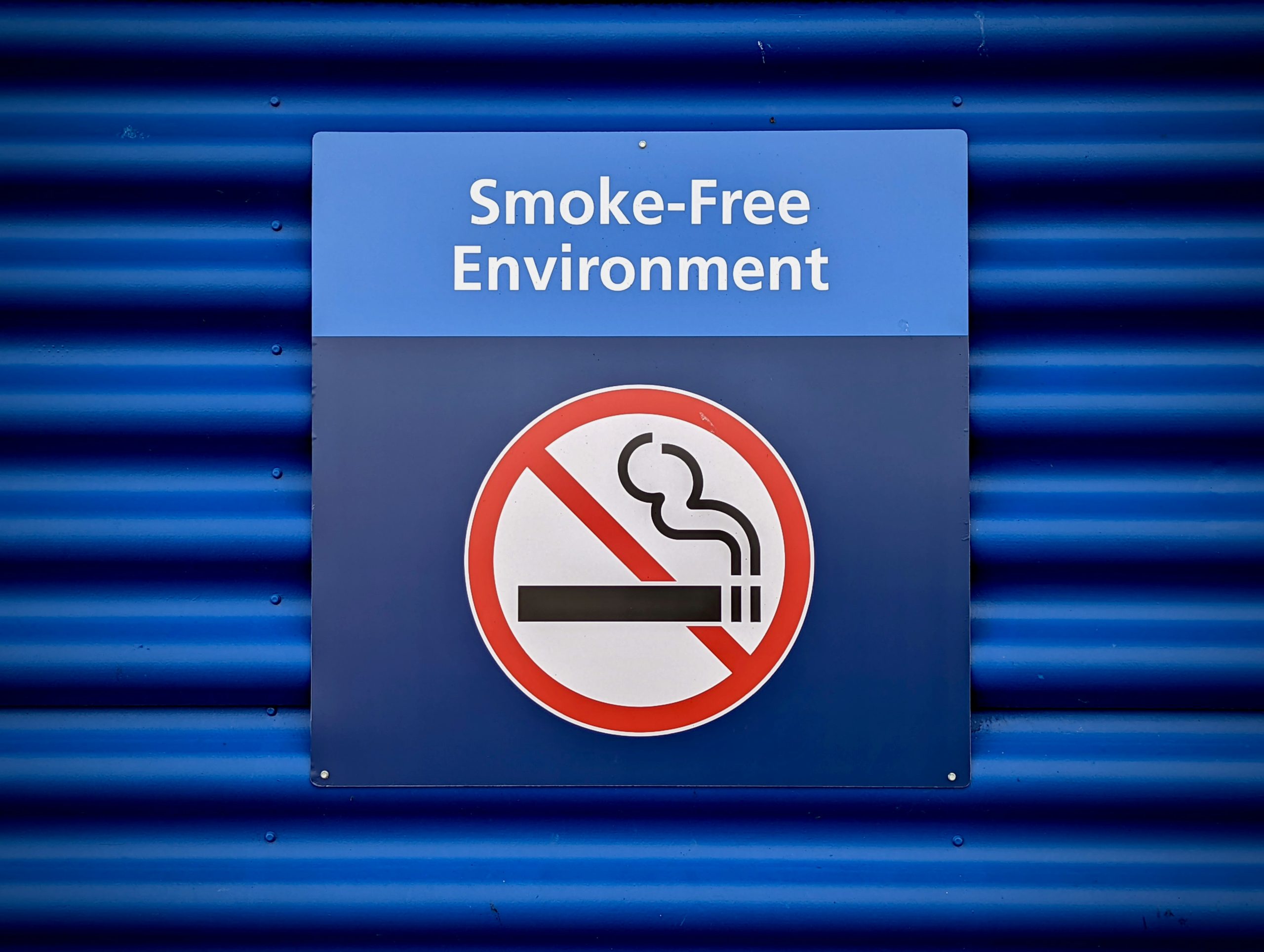
Breaking a smoking habit will be one of the best and hardest decisions you make in your life. Most people will fail several times before they are finally successful, but it is crucial to stay motivated and use your past failures as a learning tool to find a solution that works best for you.
The key is to find an important and personal reason to quit and use it as a motivational tool to guide your journey to success, alongside a solid support system, a detailed action plan, and NRTs, like patches, gum, or transitional vape prescriptions, to give yourself the best chances to drop the habit once and for all.
https://unsplash.com/photos/a-blue-sign-with-a-no-smoking-sign-on-it-4U2FZTl7Sh8
Find Your Reason
Everyone has their own personal reasons for quitting. Regardless of the reason you pick, you need to think about what is most important to you and how smoking is negatively impacting it. Having a strong reason to quit will help you stay motivated on the days when your cravings or withdrawal symptoms feel more intense.
For many people, they choose to quit smoking to improve their health and live a longer, better quality of life. From the moment you stop smoking, your body begins to recover from the harmful chemicals and toxins you have been ingesting, getting stronger and healthier over time. In some countries around the world, smoking can be a very costly habit, with prices continuing to rise. Consider how much money you typically spend on your smoking habit and better ways this money could be spent.
With more and more cities, states, and countries worldwide introducing strict laws and regulations around smoking indoors, you will quickly find that smoking becomes a bigger inconvenience. Standing outside in the cold and rain or leaving establishments because you have to smoke may no longer be worth it.
Finally, secondhand and thirdhand smoke harms anyone who inhales it, including family members, children, and pets. Regardless of your age or health, regularly inhaling secondhand smoke can lead to serious and potentially deadly health conditions. Choosing to prioritize not only your health but the health of your loved ones may be a strong enough reason to kick the habit for good.
Prepare Before You Quit
Overcoming a smoking habit is one of the hardest addictions to quit. In fact, only 4-7% of all people who attempt to quit cold turkey are successful in avoiding relapse. To maximize your chances of success, it is essential to have a plan that you can refer to whenever needed, especially on days when you feel like you’re struggling more than usual.
The first 7 to 14 days will be the toughest in your journey, and you may find yourself needing the most help. It is during this time that you need to remind yourself of your reasons for quitting, turn to the activities you have selected to help distract you from cravings, identify and avoid any triggers that may cause you to slip, and lean on the support system you have built around yourself. These systems can include trusted family and friends who know and support your quitting journey, sessions with a qualified addiction therapist, or joining a support group with individuals who are in the same position as you and can understand your struggles.

https://unsplash.com/photos/single-cigarette-stick-with-ashes-stick-lzcKZlVPYaU
Explore NRTs
Utilizing nicotine replacement therapy is a fantastic and proven way to manage withdrawal symptoms when you initially decide to quit smoking. These products contain small amounts of nicotine that provide your body with a controlled dose while you overcome your addiction. This amount gradually decreases over time until you no longer experience nicotine withdrawal symptoms. There are multiple different options available, including patches, gum, lozenges, and nose sprays, some of which require a prescription.
Before starting any NRT, it is crucial to consult with your GP to discuss your current health and the options best suited to you. They will also play an active role in managing your cravings and withdrawal symptoms. In some cases, a short-term, low-dose nicotine vape prescription may be issued to act as a transition tool in your quitting journey.
Get Moving
In the initial stages of quitting, you may be quicker to anger or feel heightened levels of frustration and aggression, often made worse by anxiety and feelings of stress and tension. To take the edge off these negative emotions without giving in to your cravings, many experts recommend taking up physical activity.
This can be as simple as walking around the block when you start to feel overwhelmed or picking up a sports or gym class that can help clear your mind and release endorphins. Additionally, activities such as low-intensity yoga, meditation, and breathing exercises can help you better regulate intense, negative emotions.

https://unsplash.com/photos/woman-in-black-tank-top-sitting-on-brown-wooden-dock-during-daytime-xce530fBHrk
What to Expect
One of the biggest mistakes you can make when deciding to quit smoking is underestimating how intense cravings and withdrawal symptoms can be. The most common symptoms you will experience when you first stop smoking include anger, anxiousness, stress, irritability, restlessness, trouble concentrating and sleeping, frequent cravings to smoke, increased appetite, depression, flu-like symptoms, and dizziness.
The good news is that there is no guarantee you will experience all of them, and as time passes, they will grow weaker, allowing you to become better at managing them. Ensuring you have healthy, sustainable, and safe ways to deal with these emotions and cravings is a vital part of your roadmap to success.
Main featured image: Photo by Cristian Guerrero on Unsplash
