
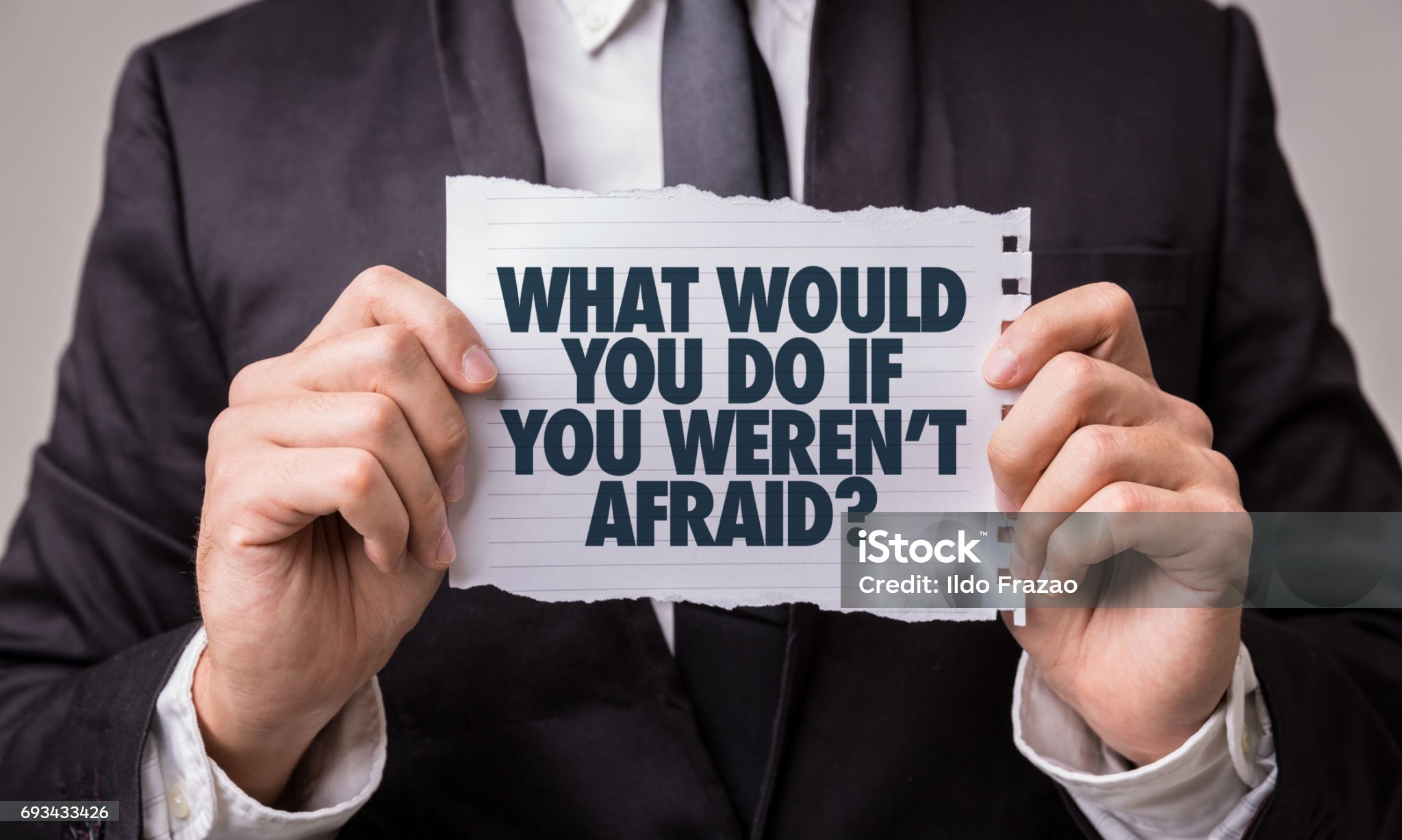
Fear is not the enemy.
It just often gets lost.
At its core, fear is one of the most useful systems we have. It evolved to keep us alive. If a lion is chasing you, fear is doing its job beautifully. If you’re in a high-speed chase, or a terrorist is pointing a weapon at you, fear sharpens attention, mobilises the body, and helps you act fast. In those moments, fear is not a flaw. It’s intelligence in action.
The problem is that fear doesn’t always know when to stand down.
Many of us experience fear in situations where there is no lion, no weapon, no imminent threat. Yet the body reacts as if there is. Heart racing. Muscles tightening. Thoughts spiralling. We hesitate, avoid, delay, retreat. I’ve seen this paralysing effect in countless people, and I’ve experienced it myself. Fear convincing us to stop, to wait, to hide, even when moving forward would actually be safe, sensible, and life-expanding.
This blog is about how to stop fear in its tracks, not by eradicating it, but by putting it back in its rightful place.
Fear Has a Purpose, But It’s Context-Dependent
Fear evolved for physical survival. It works best when danger is clear, immediate, and external. A predator. A collision. An attack. In those situations, fear heightens perception and narrows focus so you can act.
Modern fear, however, often operates in the absence of true danger. It shows up around:
-
Speaking up
-
Making changes
-
Starting something new
-
Leaving something familiar
-
Being seen
-
Being rejected
-
Making mistakes
The nervous system reacts as if survival is at stake, even when the actual risk is emotional discomfort, embarrassment, or uncertainty. Fear doesn’t distinguish well between “this might hurt” and “this might kill me.”
When fear is misapplied, it stops being protective and starts being restrictive.
How Fear Paralyses Us
Fear rarely says “I am fear.”
It says:
-
“What if this goes wrong?”
-
“You’re not ready yet.”
-
“Wait until you’re more confident.”
-
“Better not risk it.”
-
“What will people think?”
It convinces us that hesitation is wisdom. That avoidance is safety. That staying still is the responsible choice.
But over time, this kind of fear shrinks lives.
People don’t fail because they’re incapable. They fail because fear makes them freeze. They don’t move forward because fear tells them movement is dangerous. They don’t trust themselves because fear undermines their sense of agency.
Stopping fear in its tracks doesn’t mean never feeling afraid. It means learning how to move anyway.
Tip One: Don’t Overthink It
Overthinking is fear’s favourite playground.
When you overthink, you give fear time to multiply. One thought becomes ten. Ten become a story. The story becomes evidence. Before you know it, you’re paralysed by possibilities that haven’t happened and may never happen.
Overthinking creates the illusion of control. It feels like preparation, but it’s often just avoidance in disguise.
Most meaningful actions don’t require exhaustive mental rehearsal. They require movement.
Ask yourself:
-
Do I actually need more information, or am I just afraid to act?
-
Am I problem-solving, or am I looping?
Action cuts through fear far more effectively than rumination. Even small action interrupts the spiral.
Fear thrives in hesitation. It weakens when you move.
Tip Two: Learn to Take Risks, But Do a Basic Risk Assessment
This is not about recklessness. It’s about proportion.
Many people confuse risk-taking with irresponsibility. In reality, most life decisions sit somewhere between danger and total safety. The key is learning to assess risk realistically, not emotionally.
A basic risk assessment asks:
-
What is the actual risk here?
-
Is there real danger, or just discomfort?
-
What would I advise a friend in this situation?
Fear exaggerates threat. It inflates consequences and underestimates your ability to cope. A simple, rational check often reveals that the risk is manageable.
Growth always involves some uncertainty. Waiting in any other good advice based on research
You can add these as new sections or integrate them under a heading like “What the research tells us about overcoming fear”.
Tip Three: Use Behaviour to Lead Emotion (Not the Other Way Around)
One of the most robust findings in psychology is that action often precedes confidence, not the other way around.
People commonly wait until they “feel ready” or “less afraid” before acting. Research consistently shows this is backwards. Emotions frequently change after behaviour changes.
This principle underpins behavioural activation, a core component of cognitive behavioural therapy. Studies show that when people engage in meaningful or goal-directed actions despite fear or low mood, their emotional state improves as a consequence.
Fear tells you: “Feel safe first, then act.”
Reality says: “Act first, and safety follows.”
This doesn’t mean forcing yourself into extremes. It means taking small, values-based actions that prove to your nervous system that movement is survivable.
Every time you act despite fear, you teach your brain something powerful:
“I can do hard things and remain intact.”
That learning matters more than reassurance ever will.
Tip Four: Fear Shrinks When You Stop Avoiding It
Avoidance is one of the main mechanisms that keeps fear alive.
In the short term, avoidance feels like relief. You don’t make the call. You don’t apply. You don’t speak up. Anxiety drops. The brain learns: “Avoidance works.”
But long term, avoidance strengthens fear.
Exposure research shows that when people gradually face feared situations without escaping or neutralising them, anxiety naturally decreases through habituation and inhibitory learning. The nervous system learns that the feared outcome either doesn’t happen, or is tolerable if it does.
This is why reassurance alone rarely helps. Fear needs corrective experience, not just logical argument.
Moving forward in spite of fear isn’t about forcing yourself to feel brave. It’s about letting your nervous system learn through experience that the danger it predicts doesn’t materialise in the way it expects.
Tip Five: Separate Probability From Possibility
Fear is obsessed with what’s possible.
Calm thinking focuses on what’s probable.
Yes, many things are possible. You could be rejected. You could fail. You could look foolish. But how likely are these outcomes, realistically?
Research on anxiety shows that anxious individuals consistently overestimate the likelihood and severity of negative outcomes, and underestimate their coping ability.
A helpful question is:
-
“Is this a genuine probability, or just a possibility my fear is fixating on?”
Then bring in the second half of your strategy:
-
“If the worst did happen, what would I actually do?”
This question restores agency. It reminds you that even unwanted outcomes are navigable. Fear loses power when it realises you have contingency plans.
Tip Six: Stop Excessive Self-Monitoring
You’ve already touched on this powerfully, and research backs it up strongly.
When attention turns inward excessively, fear intensifies. This is known as self-focused attention, and it plays a central role in anxiety disorders.
When you’re constantly monitoring:
-
your thoughts
-
your heart rate
-
your anxiety levels
-
whether you’re coping “correctly”
you amplify fear signals.
Studies show that shifting attention outward reduces anxiety symptoms. Focusing on the environment, the task, the people around you, or sensory input grounds the nervous system in the present rather than the imagined future.
As you put it so well:
When you are on your own mind, you are in enemy territory.
Fear thrives in internal echo chambers. It weakens when attention is anchored to the real world.
Tip Seven: Regulate First, Then Reason
When fear is high, the rational brain is partially offline. This is a neurobiological fact, not a personal failing.
Trying to think your way out of fear without calming the body often doesn’t work. Research on emotion regulation shows that physiological calming precedes cognitive flexibility.
Simple regulation tools include:
-
Slowing your breath
-
Grounding through sensory awareness
-
Gentle movement
-
Naming what you can see, hear, and feel
Once the body settles even slightly, the mind becomes more flexible. Then your cognitive tools, like reframing or problem-solving, actually have traction.
This is why fear management is not about positive thinking alone. It’s about working with the nervous system, not against it.
Tip Eight: Use Self-Talk That Builds Agency, Not Pressure
Positive affirmations can be helpful when they are believable and empowering, not grandiose or dismissive of reality.
Research shows that self-statements that emphasise agency and coping are more effective than statements that demand certainty or perfection.
Helpful examples include:
-
“I will find a way through.”
-
“I don’t need to feel ready to take one step.”
-
“I believe in my ability to handle what comes.”
These statements don’t deny fear. They place fear alongside capability.
Fear weakens when it realises it is not in charge.
Tip Nine: Accept Fear Instead of Arguing With It
Ironically, trying to eliminate fear often strengthens it.
Acceptance-based approaches show that when people stop fighting fear and instead allow it to be present while acting in line with their values, fear loses its grip.
Fear is information, not instruction.
You can acknowledge it without obeying it.
“I feel afraid, and I’m still moving.”
This stance removes the internal battle. You stop wasting energy trying to feel different and start investing energy in living differently.
Final Thought: Fear Shrinks When Life Expands
Fear grows when life becomes small.
It shrinks when life expands.
Every time you act, connect, create, explore, or risk disappointment, you build evidence that fear is not the final authority on your life.
Fear’s job is to alert, not to decide.
When danger is real, listen to it.
When it’s not, thank it, and move anyway.
That is how fear is stopped in its tracks.
