
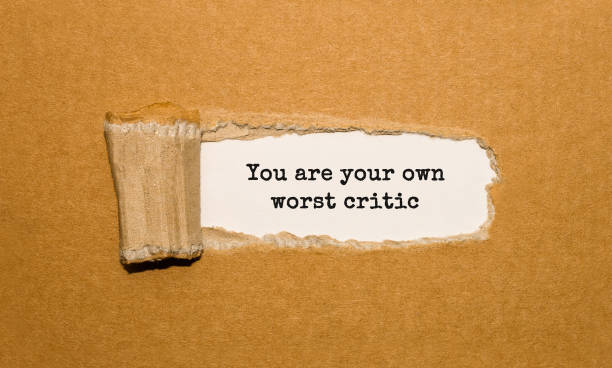
Most of us think of relationships as something that happens between two people. But there is another relationship that is just as impactful — one that we carry into every friendship, every workplace, every romance and every quiet moment alone:
The relationship you have with yourself.
It shapes:
-
How you speak to yourself when you fail
-
How safe you feel in your own mind
-
How you navigate uncertainty and stress
-
Whether you allow yourself rest, joy, and compassion
When that relationship is harsh, self-demanding, or conditional — anxiety has fertile ground to grow.
This article explores the powerful connection between self-compassion, perfectionism, internal pressure, and panic attacks — plus how to shift from inner critic to inner supporter.
The Inner World No One Sees
Even if you appear calm and successful on the outside, your inner dialogue may sound like:
-
“I should be doing more.”
-
“Everyone else handles this better.”
-
“I can’t mess up.”
-
“If I let myself rest, I’m weak.”
Over time, this forms a hostile internal environment — one where you feel constantly judged, even when you’re alone. The body responds as if under constant threat:
-
Muscles tense
-
Breathing becomes shallow
-
The nervous system stays on high alert
This internal stress becomes normalized — until something small tips the balance.
And suddenly:
Your heart races.
Vision narrows.
You feel dizzy.
Your chest tightens.
Your mind screams: What’s happening to me? Am I dying?
That terrifying rush is commonly a panic attack. Not a heart attack. Not a sign of danger.
A sign of your internal pressure reaching boiling point.
Why Lack of Self-Compassion Triggers Anxiety
Humans are wired for care and protection. But we often reserve that care for others — not ourselves.
Self-compassion research led by Dr. Kristin Neff shows that treating ourselves with harshness and shame actually increases:
-
Anxiety
-
Procrastination
-
Emotional reactivity
While increasing self-compassion has been shown to:
-
Calm the nervous system
-
Enhance resilience
-
Improve coping with stress
-
Reduce anxiety and panic symptoms
Why?
Because when you treat yourself like an enemy, your brain reacts like you really are under attack.
Self-Induced Pressure & the “Always Strive” Trap
Perfectionism isn’t the pursuit of excellence — it’s the belief that:
“Anything less than flawless makes me unworthy.”
Perfectionism can look like:
-
Feeling guilty if you’re not productive
-
Overworking to avoid disappointing others
-
Constant comparison to people who seem “ahead”
-
Setting unrealistic expectations and calling them “motivation”
-
Struggling to celebrate wins because you could have done more
Pressure becomes the water you swim in — unnoticed until you’re drowning.
Perfectionism tells you to run faster.
Anxiety screams that you’re not fast enough.
Panic attacks occur when your body physically can’t keep running.
A Real-Life Story: Elena’s Breaking Point
Elena was the kind of person colleagues admired. Talented. Reliable. The one who always said yes.
Inside? A different story.
Her inner voice:
“Don’t let anyone down.”
“If you slow down, they’ll lose respect for you.”
“You have no excuse to struggle when others have it worse.”
She skipped breaks. Worked late. Apologised if she wasn’t the best in the room.
She believed rest was earned — and she never earned it.
One afternoon during a presentation, her heart began to pound. She felt heat rush up her neck. The room tilted. Her hands shook so hard she hid them behind the podium.
She was certain: I’m about to faint. I’m losing control. I’m dying.
Her boss rushed her to urgent care. The doctor listened, nodded, and said gently:
“Your body isn’t failing you.
It’s trying to protect you.
You pushed too hard for too long.”
The panic attack terrified her — but what terrified her more was realising how cruel she’d become towards herself.
Healing began the moment she asked:
“If someone I loved were struggling like this… would I treat them the way I treat myself?”
The answer broke her heart — and opened it.
The Inner Critic vs The Inner Supporter
Every anxious person knows the Inner Critic:
-
Quick to judge
-
Obsessed with flaws
-
Never satisfied
-
Good at predicting failure, terrible at noticing success
But there is another voice available to us — one we must actively cultivate:
The Inner Supporter:
-
Speaks with kindness
-
Values progress
-
Accepts imperfection
-
Encourages rest, recovery, and joy
-
Comforts during fear instead of condemning it
Your Inner Supporter is not indulgence.
It is strength.
Because safety — not fear — is what allows growth.
The Nervous System’s Role: Hyper-Vigilance on Repeat
Your brain’s threat system — the amygdala — doesn’t understand perfectionism.
It only hears:
“Not enough.”
“Not safe.”
“Not acceptable.”
So it keeps the alarm switched on.
When there’s no real danger outside you, the danger feels like it must be inside you — heart, lungs, stomach, brain.
The body begins to mistrust itself.
And panic follows.
The Cycle Looks Like This:
-
High internal pressure → chronic stress hormone levels
-
Nervous system grows hyper-sensitive
-
Small trigger causes major panic response
-
Panic is interpreted as proof of weakness → more pressure
-
Cycle repeats
Self-blame is the fuel.
Self-compassion is the antidote.
How to Become Your Own Best Supporter
Healing the relationship with yourself isn’t about clichés.
It’s about changing what you do in the moments you feel most flawed.
Here are powerful, research-aligned steps:
1️⃣ Practice Self-Validation — Especially When Emotions Are Messy
Instead of:
“What is wrong with me?”
Try:
“Of course I feel scared — I’m under a lot of pressure.”
Validation reduces the brain’s threat signal.
2️⃣ Speak to Yourself Like Someone You Love
Literally ask:
-
“Would I say this to a friend?”
-
“Would I treat a child this way?”
If the answer is no → rethink your self-talk.
Gentle is not weak.
Gentle is healing.
3️⃣ Define “Enough”
Setting boundaries with yourself might be the bravest thing you do.
Create criteria for completion:
-
“I will stop working at 6pm.”
-
“Done is better than perfect.”
-
“I deserve rest simply because I am human.”
Excellence flourishes under support — not fear.
4️⃣ Interrupt the Anxiety Spiral With Your Body
When panic rises:
-
Ground your senses: what you see, feel, smell
-
Slow your breath: longer exhales calm the vagus nerve
-
Place a hand on your chest: signalling safety to the nervous system
Your body listens to physical reassurance more than words.
5️⃣ Celebrate Small Wins
Your brain needs evidence that it’s allowed to feel proud. Otherwise, perfectionism steals joy from progress.
Daily practice:
“What went right today?”
Even one sentence rebuilds self-worth.
6️⃣ Reframe Failure As Data, Not Identity
Failure is a teacher — not a verdict.
When something goes wrong:
-
Label what happened, not who you are
-
Ask: “What did this teach me?”
-
Try again with curiosity, not shame
Progress requires permission to be imperfect.
7️⃣ Build a Life Where You Are Safe to Rest
Create habits that protect calm:
-
Scheduled downtime
-
Saying no
-
Slower mornings
-
Softer expectations
Your nervous system will only trust you if you show it that recovery is welcome.
The Most Important Truth: You Are Not a Machine
You are not designed to:
-
operate without pause
-
excel without error
-
perform without emotion
You breathe.
You feel.
You break and rebuild.
You are meant to be tender with yourself.
Self-compassion isn’t a luxury — it is psychological survival.
A New Inner Contract
Here is one you can adopt today. Read it slowly:
I will not motivate myself with cruelty.
I will not punish myself for being human.
I will listen to my body when it whispers,
so it does not have to scream.I am allowed to rest.
I am allowed to fail.
I am allowed to exist without earning it.
This is what it means to become your own best supporter.
If You’re Struggling Right Now
Before you go, I want you to hear this:
You deserve care
even when you’re anxious.
Especially then.
There is no amount of perfection
that will make you finally “worthy” of peace.
You already are.
Breathe.
You’re doing enough.
You are enough.
Your relationship with yourself is the longest one you will ever have. Make it a kind one.


